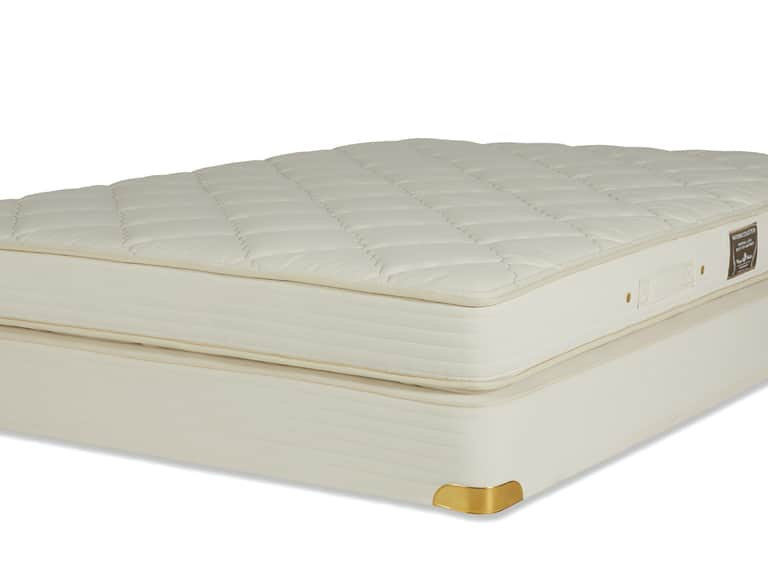
A practical guide to mattress materials
Naturepedic’s Materials and Certifications: What to Check Before You Choose
A label can be reassuring. It can also be incomplete. When comparing Naturepedic sleep products, look beyond the language of “natural” or “organic” and examine the materials, construction, certification scope, care requirements, and model-specific details that determine what you are actually bringing into the bedroom.
There is a particular optimism attached to the word organic. It suggests a cleaner supply chain, a more considered choice, perhaps even a little less uncertainty at the end of a long day. In bedding, though, reassuring words are only the beginning of the inquiry. A mattress is not one material but an assembly: a cover, comfort layers, a support system, seams, finishes, and sometimes a fire barrier, each with its own properties and potential certifications.
That is why researching a Naturepedic mattress or other sleep product is best approached less like reading a slogan and more like reading a map. What is each layer made of? Which standard, if any, applies to it? Does a certification cover the finished product or only a particular ingredient? How does the construction relate to your comfort preferences and the way you intend to use the bed?
The answers will not tell you whether a mattress is perfect for every sleeper. They can tell you whether the claims are specific, whether the product fits your priorities, and what questions remain. That is a more useful kind of certainty.
Begin with the materials list, not the headline
Product descriptions often lead with a broad identity: organic, natural, non-toxic, or sustainably made. Such terms may point toward meaningful standards, but by themselves they do not identify what is inside a particular mattress. Start instead with the component list. Look for the materials named in the cover, comfort layers, support core, batting, adhesives, and fire-protection system.
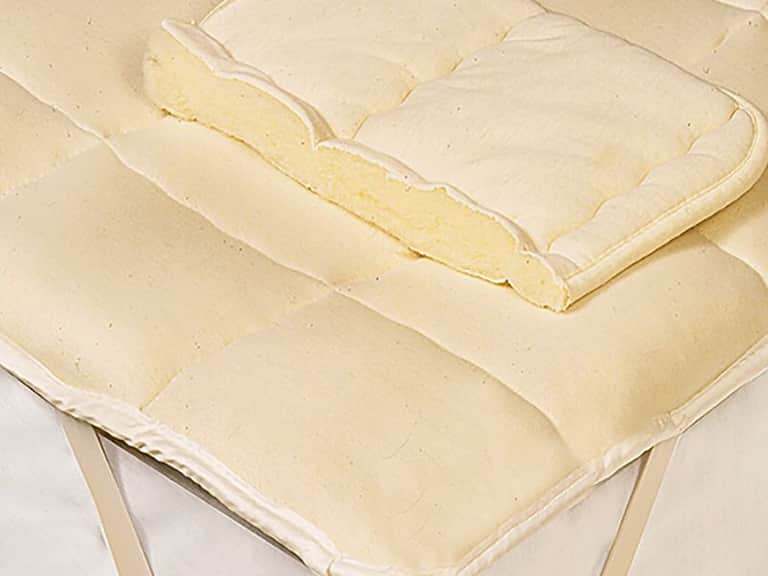
Specificity matters. “Cotton cover” is a useful start; a fuller description might identify whether the cotton is organic, whether it is used throughout the cover or only in a portion, and what is on the reverse side. “Latex” raises further questions: Is it natural, synthetic, or a blend? Is it used as a comfort layer, a support core, or both? “Wool” could refer to a substantial batting layer or a small amount in a quilted panel. The word alone does not indicate quantity or location.
Ask for a layer-by-layer account, especially when several materials are combined. A mattress may pair a cotton fabric with latex, wool, or another filling, while its foundation uses a different construction altogether. Knowing the sequence helps you understand both the material story and the likely feel of the sleep surface.
- Cover: Identify the face fabric, any backing, quilting fill, and whether the cover is removable or intended to remain in place.
- Comfort layers: Check the material type, thickness, and order. These layers contribute substantially to cushioning and pressure relief.
- Support core: Determine whether support comes from springs, foam, latex, or a combination, and whether the construction differs by model or size.
- Fire barrier and finishes: Ask what provides fire protection and whether any finishes or treatments are specified.
- Assembly: Look for information about adhesives, stitching, quilting, and how layers are held together.
If a description names materials but leaves out their placement or role, that is not proof of a problem. It is a reason to seek clarification. Clear answers make it easier to compare one model with another without relying on a cloud of similar-sounding adjectives.
What a certification can—and cannot—tell you
Certifications are most useful when you know their boundaries. A third-party standard may assess the content of a material, the way it was processed, emissions from a product, or a facility’s practices. Those are different questions. A certificate attached to one component does not automatically certify every other component in the mattress, and a certification’s presence does not by itself describe comfort, durability, or suitability for a particular sleeper.
When you see a certification on a Naturepedic product page, ask three practical questions. First, what is covered? Is the certification for a fiber, a latex component, a textile, a finished product, or a manufacturing process? Second, which model does it apply to? Product lines and constructions can vary, so do not assume a claim for one item transfers to another. Third, what does the standard actually evaluate? The answer may concern organic content, chemical restrictions, emissions, or another defined set of criteria.
Labels such as GOTS, GOLS, GREENGUARD Gold, or MADE SAFE may appear in discussions of organic and lower-emission sleep products. Their names are not interchangeable, and their standards address different subjects. For any claim, consult the current certification documentation and the certifier’s own description of its scope. Then check that the product, material, or facility named in that documentation matches the item you are considering.
Pay attention to small but consequential distinctions. “Made with certified organic cotton” is not identical to “the finished mattress is certified organic.” “Low emissions” is a different claim from “made without a particular chemical.” A certification may apply to a specific material, while the finished product contains several other materials outside that scope. None of these distinctions necessarily diminishes the value of the certification; they simply define what it can establish.
It is also sensible to verify that a claim is current. Standards can change, certificates can expire, and product specifications can be revised. A logo on an older page or a third-party retailer listing may not settle what applies to a model being sold today. Look for a current certificate, a date, a product name or model identifier, and a clear explanation from the brand of how the certification relates to the finished product.
“Natural” and “organic” are not complete descriptions
Natural materials often have appealing properties. Cotton is familiar and breathable; wool can help manage moisture and offers a resilient, insulating fill; latex can provide buoyant support. But a material category is not a performance guarantee. The feel of a mattress depends on its formulation, thickness, density, quilting, support system, and the layers around it. Two products that both use latex may feel markedly different.
Organic status answers a question about how a qualifying agricultural material was produced and processed under a particular standard. It does not answer every question a buyer might have about the product. It does not tell you whether the mattress is too firm for your shoulders, whether its dimensions suit your frame, or whether it will keep you comfortable at your usual room temperature. Those are separate matters worth examining alongside certification.
Likewise, “natural” may describe an ingredient without explaining the full construction. Ask whether the term refers to all of a material or a blend, and whether the description identifies the other components. If a product page gives only a general phrase, seek a more detailed specification sheet. A serious materials decision is often made in the footnotes.
For shoppers with allergies, sensitivities, or particular health concerns, a materials list is a starting point—not a medical assessment. If you need to avoid a particular substance, verify its presence or absence directly with the manufacturer and, where appropriate, consult a qualified health professional. Broad marketing language should not be treated as a substitute for a precise answer about an individual ingredient.
Construction is part of the materials story
Materials rarely work alone. Their arrangement affects how a mattress responds under pressure, how it regulates temperature, how the surface feels, and how the layers may age. A generous natural-fiber layer can feel plush at first; a firmer support core beneath it may keep the mattress from feeling soft overall. A quilted cover can change the sensation at the surface, while a tightly assembled structure may make a cover impossible to remove without damaging the product.
When assessing construction, find out whether the comfort layers are integrated into the mattress or can be adjusted. Check whether the cover is removable and, if so, whether it is washable or merely removable for service. A removable cover is not necessarily intended for routine laundering. Follow the manufacturer’s care instructions rather than assuming that a zipper is an invitation to wash.
Ask about the support system and foundation requirements, too. Some mattresses are designed for particular bases or spacing between slats. A mismatch can affect support, void warranty terms, or complicate everyday use. If you plan to use an adjustable base, confirm compatibility for the specific mattress model—not just for the brand’s general range.
There is a practical, unromantic side to a materials decision: weight, delivery, setup, mattress depth, fitted-sheet fit, and the difficulty of moving a large bed through a narrow stairwell. These details belong in the evaluation. A carefully chosen material is less useful if the mattress cannot be installed or cared for in the way your home requires.
Match the specification to your comfort needs
Certifications can help clarify what a product is made from. They cannot determine whether you will sleep well on it. Comfort is individual and depends on body shape, sleeping position, temperature preference, movement, and the feel you enjoy. The same mattress can seem welcoming to one person and unyielding to another.
Begin by describing your preferences in ordinary language. Do you like a surface that cushions the shoulder and hip, or one that feels flatter and more buoyant? Do you sleep primarily on your side, back, or stomach? Do you share the bed with someone who moves frequently? These answers will help you interpret the construction details. A softer comfort layer may feel different from a softer support system; the distinction is useful when comparing specifications.
Trial policies and warranties deserve their own reading. A trial period may include conditions about the length of time you must keep the mattress, return fees, or the state in which it must be collected. A warranty usually addresses specified defects rather than ordinary changes in feel or personal dissatisfaction. Read the actual terms, including the required foundation and care conditions, before assuming that a guarantee covers a particular concern.
If possible, test the mattress in a way that resembles how you actually sleep. A brief sit on the edge is not the same as lying down for several minutes in your usual position. If you are shopping remotely, look for a trial period with transparent terms and confirm that the policy applies to your exact model and location.
A method for comparing Naturepedic models
When product pages are dense with claims, a simple comparison table can restore perspective. Put the model names across the top and the questions below down the side. Record only what the available documentation actually says; mark missing information as a question rather than filling the gap with an assumption.
| What to compare | What to record |
|---|---|
| Materials | Each named layer, its location, and any stated blend or thickness. |
| Certifications | Standard, certifier, covered component or product, and current documentation. |
| Construction | Support system, quilting, assembly details, and whether the cover is removable. |
| Comfort | Firmness description, available options, and how the construction may relate to your preferences. |
| Care and use | Cleaning instructions, base requirements, dimensions, and compatibility with your setup. |
| Policies | Trial conditions, return costs, warranty exclusions, and delivery or setup arrangements. |
This exercise often reveals that two models sharing a brand name are not simply different firmnesses of the same object. They may use different materials, constructions, or certification scopes. It also makes a conversation with customer service more productive: instead of asking whether a mattress is “clean,” you can ask which layer is covered by a particular standard and where to find the current documentation.
Questions worth asking before you choose
A good product page should answer much of the following. If it does not, the questions are reasonable to put to the manufacturer or retailer.
- Can you provide a layer-by-layer materials list for this exact model and size?
- Which components are certified, and what does each certification cover?
- Is the certification current, and can I review documentation identifying the product or material?
- What provides fire protection, and is that component included in the certification claim?
- Are adhesives, finishes, or other treatments used in assembly?
- Is the cover removable, and what cleaning methods are permitted?
- What foundation or bed base is required, and does the mattress work with an adjustable base?
- What are the trial, return, delivery, and warranty conditions for this specific purchase?
Clear, direct answers are a mark of useful product information. A response that restates a headline without addressing the scope of the question leaves the important work undone. There is no need for suspicion in every exchange; there is a need for precision.
A note on care and longevity
Materials and certifications matter at purchase, but care determines how the mattress lives afterward. Follow instructions for rotating or positioning the mattress, using a protector, cleaning spills, and ventilating the bed. Do not assume that natural fibers should be treated as washable, or that a removable cover can go into a household machine. A cleaning mistake can damage a layer even when the original choice was sound.
Use a protector if it is appropriate for the mattress and compatible with the feel you want. Protectors differ in their breathability, water resistance, and surface texture; their own materials can influence the sleep experience. Check dimensions and depth as well as the care label. A poorly fitting protector can bunch beneath the sheet, turning an otherwise calm surface into a small nightly negotiation.
Finally, distinguish ordinary impressions from a defect. Materials compress and settle with use, but the terms of a warranty define what counts as a covered issue. Keep the purchase documents and note the base used. The unglamorous habit of saving a specification sheet can be valuable years later, when memories of the product page have softened.
The most useful standard is a clear answer
Naturepedic’s material and certification claims are best evaluated one product at a time. Begin with a complete component list. Identify the scope of each certification. Compare construction and care requirements, then decide whether the mattress’s feel and practical terms suit your needs. “Organic” may be an important priority, but it is not a substitute for knowing what is certified, where it appears, and how the product is assembled.
A careful buyer does not need to become a textile chemist or memorize every standard. The task is simpler: translate broad claims into verifiable details. When those details are available, certifications become useful tools rather than decorative badges. When they are missing, you know exactly what to ask next.
In the end, a mattress is an intimate object with an unusually public vocabulary. Its labels speak of farming, chemistry, craftsmanship, and comfort; its actual job is quieter. It has to support the body, fit the room, and make sense to the person who sleeps on it. Reading the materials list closely is one way to let those promises meet the real thing.