A practical guide to materials, support, and labels
How to Evaluate Organic Sleep Surfaces: Materials, Support, and Certifications
The word organic can make a mattress sound like a simple proposition: natural materials, a cleaner bedroom, a better night. In reality, a sleep surface is a layered object, and its labels describe only part of the story. To compare one thoughtfully, look past the headline claim to the ingredients, construction, support, comfort, and precisely stated scope of its certifications.
A mattress is a small landscape of materials that spends much of its life beneath a fitted sheet, out of sight and close to the body. Its most important qualities are not always the ones easiest to photograph or fit on a label. A plush top may conceal a firmer support layer; a certified fabric cover may enclose components that carry different credentials; and a phrase such as “natural mattress” may tell you less than a careful list of what is actually inside.
That distinction matters when a search begins with a vague phrase. Someone looking up “one 800 mattress,” for instance, may be trying to find a particular company, a model, a telephone-style brand, or simply information about mattresses. The words alone do not establish a product’s identity or materials. Treat the search phrase as a starting point, not as evidence. Confirm the manufacturer and model, then evaluate the actual specifications rather than assuming that a familiar-sounding name implies a particular construction or certification.
The same discipline helps with organic mattress research. Begin with what the sleep surface is made of and how it is assembled. Then ask what each certification covers, how the mattress is likely to feel, whether it suits your support needs, and how it must be cared for. A good comparison is less like choosing a slogan and more like reading a map: each detail helps you understand the terrain.
Start with the materials, not the adjective
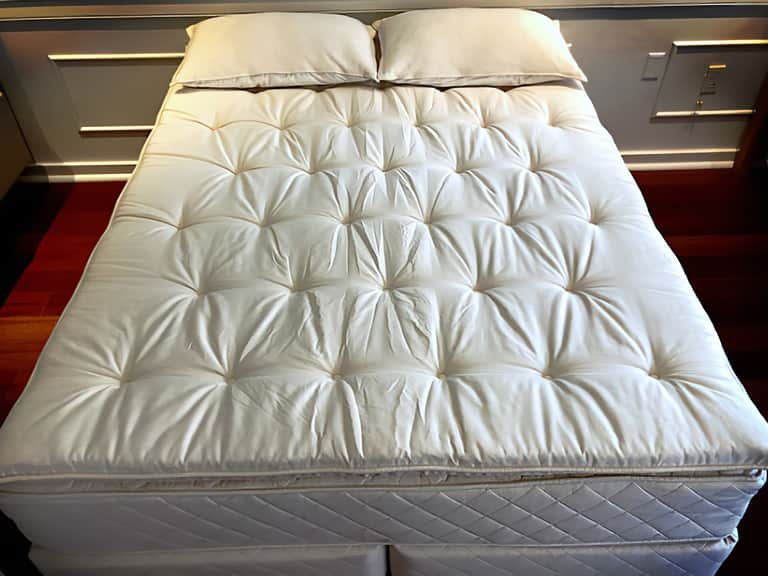
Organic mattresses commonly combine materials such as latex, wool, and cotton, but their roles differ. Latex often forms the principal comfort or support layers. Wool may be used in a quilted cover or topper, where it can add cushioning and help manage moisture. Cotton typically appears in the cover or quilted casing. The materials may be organic, but the word does not tell you their thickness, placement, firmness, or construction.
Ask for a layer-by-layer description. How many inches of each material are present? Is the latex Dunlop or Talalay? Are there multiple firmness levels? Is the wool a thin fire barrier, a cushioning layer, or part of a substantial topper? Is the cotton a woven outer fabric, a jersey knit, or part of the quilting? These are practical questions, not tests of virtue. They help explain what you will actually be sleeping on.
Natural latex is often chosen for its resilient, buoyant feel. It tends to respond more quickly to movement than traditional memory foam, which can feel slower and more enveloping. But “latex” alone is not a comfort rating. A soft layer over a firm base may feel quite different from a single medium-firm core, and two mattresses using the same broad material can be built to produce very different sensations.
Wool and cotton have distinct functions, too. Wool can take up and release moisture and is often used in mattress quilting. Cotton offers a familiar textile surface and can contribute to breathability, depending on the weave and the rest of the construction. Neither material guarantees that a particular mattress will feel cool to every sleeper. Room temperature, bedding, body heat, mattress thickness, and personal preference all enter the equation.
It is also worth distinguishing a mattress from the layers placed above it. A mattress pad or topper may change surface softness, add protection, or slightly alter pressure distribution, but it does not necessarily change the support structure beneath. If a sleep surface feels too firm, a topper might adjust the first impression; it cannot reliably correct a support system that is inappropriate for the sleeper or the bed frame.
Understand what a certification does—and does not—say
Certifications can make material claims easier to assess, provided you know what claim is being certified. Standards have different scopes. Some address the organic status of agricultural materials or the processing chain; others focus on emissions, chemical restrictions, or social and environmental criteria. A certification for a textile component does not automatically certify every material in the mattress, and a certificate for an ingredient is not necessarily a certificate for the finished product.
For organic latex, shoppers may encounter GOLS, the Global Organic Latex Standard. For textile components such as cotton or wool, GOTS, the Global Organic Textile Standard, may be relevant. The exact certificate, the product or component it applies to, and its current validity are more useful than a logo reproduced without explanation. Ask whether the claim covers the finished mattress, a particular material, or a facility or stage in the supply chain.
Other standards address different questions. GREENGUARD Gold, for example, concerns chemical emissions into indoor air; it is not, by itself, proof that a product is made from organic materials. Likewise, a statement that a mattress is “non-toxic” is broad and can be difficult to interpret unless the maker explains the basis for it. A useful comparison separates claims about organic sourcing from claims about emissions, restricted substances, and manufacturing practices.
Read the language around a badge carefully. Does the seller name the certifying organization? Is there a certificate number or a way to verify the claim? Does the documentation identify the model you are considering? If the company says “certified organic,” ask what precisely is certified. A clear answer should identify the component or finished product and avoid implying that one certified layer automatically confers the same status on every other part.
Certification is not a substitute for comfort testing or construction details. A well-documented material may still be too firm, too soft, or too thick for your needs. Conversely, a mattress without a particular certification is not automatically unsafe or unsuitable. The point is to know which standards matter to your priorities and to compare like with like, rather than treating any one label as a universal score.
Support is a construction question
Support is sometimes described as though it were a single quality, like a mattress’s personality. In practice, it is the interaction between the sleeper, the mattress layers, and the foundation underneath. The surface should provide enough cushioning for comfort while the deeper layers help keep the body in a position that feels sustainable. A mattress can feel soft at first touch and still have a firm support core; it can also feel firm overall without being a good match for every body or sleeping position.
Think about your usual sleep position, but do not mistake a general guideline for a prescription. Side sleepers often notice pressure at the shoulders and hips, so they may prefer a surface with enough give in those areas. Back sleepers may pay attention to whether the waist and lower back feel adequately supported. Stomach sleepers often prefer a less yielding surface, though individual comfort varies. If you share a bed, each person’s preferences and the mattress’s ability to limit movement across the surface may matter.
Firmness labels are not standardized across all manufacturers. “Medium” on one mattress may feel different from “medium” on another, and a person’s body weight, shape, mobility, and sensitivity to pressure can change the sensation. Use firmness descriptions as clues, not as measurements. If possible, test the mattress in the position you normally sleep in and give yourself enough time to notice pressure, alignment, and ease of movement.
Layer arrangement is often more illuminating than a single firmness word. A mattress may use a firm base layer beneath a medium comfort layer, or several layers of differing firmness. Some designs use zoned construction, with sections intended to vary support along the length of the bed. Ask what those zones are, where they sit, and whether they can be rearranged or replaced. Marketing language about “targeted support” becomes useful only when it is connected to an intelligible construction detail.
The foundation deserves attention, too. Slats that are too widely spaced, an unsuitable adjustable base, or a weak frame can affect how a mattress performs and may complicate warranty coverage. Check the manufacturer’s requirements for slat width, spacing, center support, and ventilation. Those instructions are part of the purchase decision, not an appendix to be discovered after delivery.
Compare actual specifications
When two organic mattresses seem similar, make a short comparison sheet. Record the materials, thickness of each layer, stated firmness, total height, available sizes, foundation requirements, warranty terms, trial or return policy, delivery arrangements, and care instructions. Note which claims are supported by named certificates and which are only general descriptions.
Product pages can provide useful examples of how much construction varies. The Naturally Organic Hudson Luxe Latex Mattress is described as having a five-inch firm Dunlop latex core and a three-inch medium Dunlop latex layer, with an organic cotton-and-wool casing and a separate topper. Its listing identifies GOLS-certified latex and GOTS-certified cotton and wool. Those details describe this particular design; they should not be taken as a general recipe for every organic mattress.
The Obasan Grand Dunlop Latex Mattress is described with multiple Dunlop latex layers, a firm or medium support-layer option, and a wool-and-latex topper. Its listing also specifies GOLS-certified latex and GOTS-certified cotton and wool. The construction illustrates why the phrase “latex mattress” does not settle questions of feel: layer count, firmness choices, zoning, and topper design all contribute to the experience.
These examples are most helpful as prompts for questions. How does the maker define the listed firmness? Can a layer be adjusted? What does the topper contain, and can it be removed? Which certification applies to which component? What foundation is required? The object is not to crown a winner from a specification sheet, but to understand what the sheet is saying—and what it leaves unsaid.
Comfort, heat, and the feel of a surface
Comfort is personal, but it is not mysterious. The main clues are pressure, posture, temperature, and movement. After lying down, notice whether you feel a concentrated ache at the shoulder or hip, whether your lower back feels unsupported, and whether changing positions takes effort. A mattress that seems inviting for a minute may feel different after a longer test.
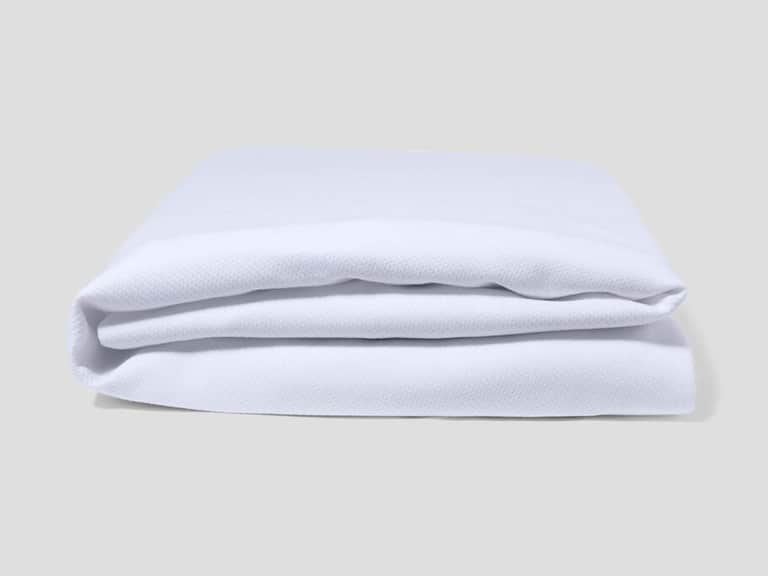
Temperature claims deserve the same measured attention as firmness claims. Wool, cotton, and latex are frequently associated with breathability or moisture management, but the final sleep climate depends on the complete assembly: the mattress cover, sheets, protector, room, and sleeper. A waterproof protector, for instance, can add a layer between the body and the mattress. Look for a description of its materials and construction, and consider whether it is likely to change the surface feel or airflow in a way that matters to you.
Motion and edge support are also not automatically determined by whether a mattress is organic. A responsive latex surface may make movement easier, while a layered construction may reduce some transfer between sleepers; results depend on the design. If you sit on the side of the bed to dress or share a mattress with someone whose schedule differs from yours, test those specific functions rather than assuming that a material label answers the question.
Care is part of the purchase
Mattresses are large, difficult objects to clean. Before buying, find out whether the cover is removable, whether it is washable, and what the maker permits for spot cleaning. Some covers are intended only for careful surface treatment; some components should never be soaked or machine washed. A removable cover is not necessarily a washable cover, and an attractive natural material may still require cautious care.
A protector can help guard against spills and ordinary soiling, but confirm that its fit matches the mattress depth and that its construction suits your preferences. Follow the washing instructions on both mattress and protector. Avoid improvising with excess water, harsh cleaners, or high heat: damage caused by cleaning may not be covered by a warranty.
Ventilation and support matter over time. Follow guidance on the correct foundation, and do not assume every mattress can be placed directly on the floor or rotated in the same way. Some designs are not reversible; others may recommend turning or rearranging internal layers. Keep the written care instructions. They are easy to overlook on delivery day and harder to reconstruct later.
A sensible checklist for shoppers
- Verify the identity. Confirm the manufacturer and exact model, particularly when a search phrase such as “one 800 mattress” returns ambiguous or unrelated results.
- Request a complete materials list. Look for layer thicknesses, material types, and the placement of latex, wool, cotton, and any other components.
- Read certification scope. Determine whether a credential covers a material, a textile, a manufacturing process, emissions, or the finished product.
- Match construction to comfort. Consider your sleep position, pressure sensitivity, preferred firmness, and whether you share the bed.
- Check the foundation requirements. Confirm slat spacing, center support, ventilation needs, and compatibility with an adjustable base if relevant.
- Understand the terms. Read the warranty, return or trial policy, delivery details, and any fees before committing.
- Keep care practical. Learn how the cover and layers should be cleaned and whether a protector is recommended.
The label is a beginning, not a verdict
Organic materials can be an important priority, but the label should open a conversation rather than end one. The strongest buying decision rests on specifics: what is in the mattress, how those materials are arranged, which claims are independently documented, and whether the surface suits the person who will sleep on it. A long list of certifications cannot tell you whether your shoulder will feel comfortable at three in the morning. Nor can a confident adjective replace clear construction details.
When a search sends you toward a product name, a number, or a sweeping claim, slow down long enough to verify what you have found. Read the model specifications. Follow certification claims to their scope. Compare support layers and care instructions, not just the most prominent badge. Then, when possible, test the surface under conditions that resemble your own sleeping life.
A mattress is not a moral document, though its materials and sourcing may reflect values worth considering. It is also not merely a slab of foam or latex. It is a piece of equipment for the ordinary, unphotogenic hours of rest. The best evaluation brings those truths together: evidence about what the mattress contains, care about how it is made, and honest attention to how it feels.